Series 1 spent the A-list, Series 2 belonged to Kirby, and Series 3 barely made it to shelves. A wave-by-wave map of all 34 figures, 8 vehicles and the one playset.
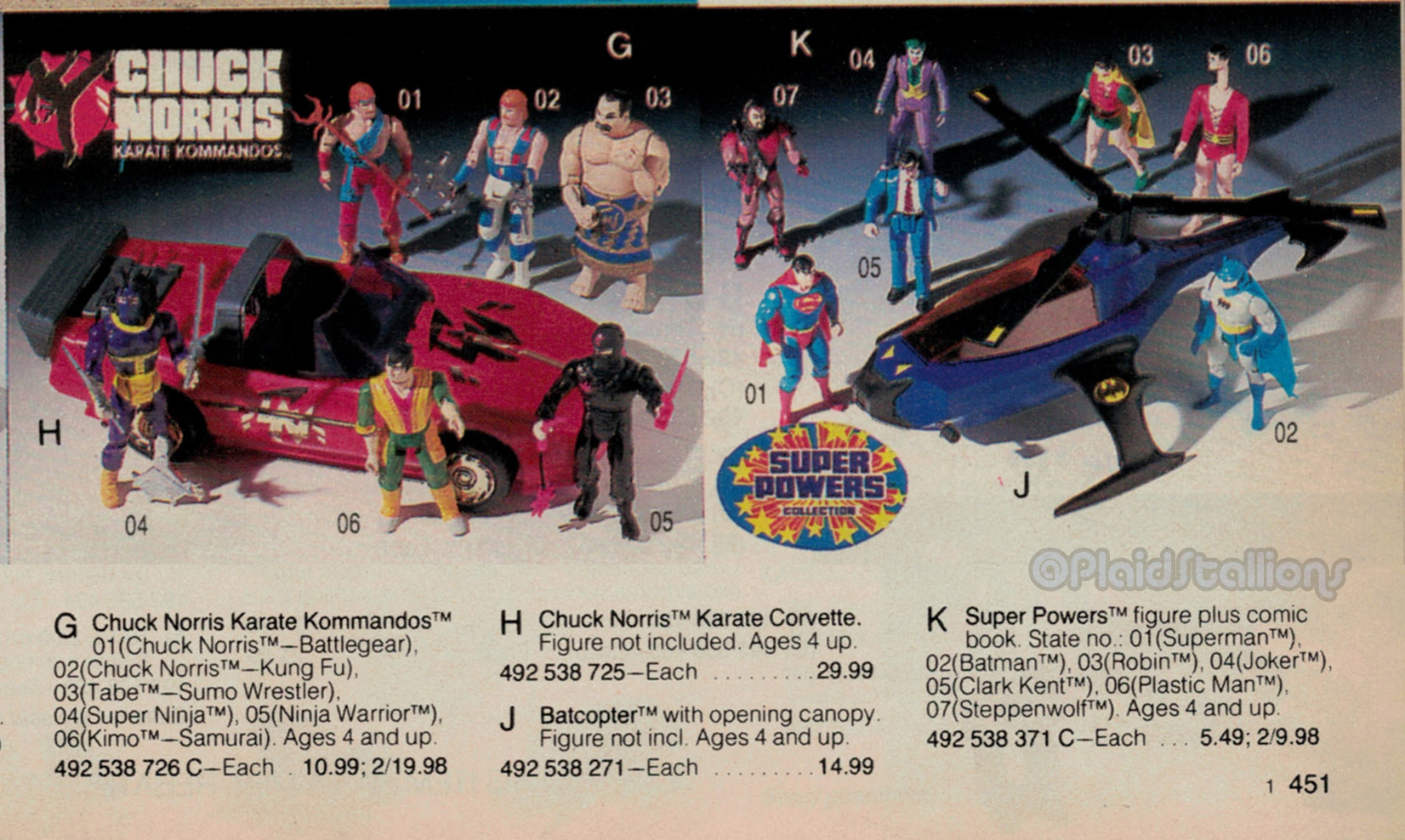
Three series, three completely different moods. Series 1 is the wave everybody recognizes, Series 2 is the one Jack Kirby's fingerprints are all over, and Series 3 is the one that barely reached shelves before Kenner pulled the plug. Knowing which wave a figure came from tells you most of what you need to know about how hard it will be to find and what you should expect to pay.
If you have not read Start Here yet, it covers the Power Action mechanism and the scale. This article is the map.
Series 1 (1984) — the greatest hits
Twelve figures: eight heroes and four villains, every one of them an icon. Kenner spent its entire A-list in a single wave, which made for a spectacular debut and a problem it never solved afterwards. These are the most common figures in the line, the cheapest to buy, and the right place to start a collection.
| Figure | Type | Power Action feature |
|---|---|---|
| Superman | Hero | Power Action Punch |
| Batman | Hero | Power Action Punch |
| Robin | Hero | Power Action Karate Chop |
| Wonder Woman | Hero | Power Action Deflection |
| Aquaman | Hero | Power Action Deep Sea Kick |
| The Flash | Hero | Power Action Running Legs |
| Green Lantern | Hero | Power Action Ring / Power Beam — came with lantern |
| Hawkman | Hero | Power Action Wings, which flap |
| Lex Luthor | Villain | Power Action — came with armor |
| Brainiac | Villain | Power Action |
| The Joker | Villain | Power Action |
| The Penguin | Villain | Power Action |
Vehicles: Batmobile, Supermobile, Lex-Soar 7.
Playset: the Hall of Justice — the only playset the line ever got. It folded sandwich-style and doubled as a carrying case, with a vehicle landing pad, a working elevator, a computer command center, security doors, jail cells with hidden trap doors, and "revitalization" chambers that stored up to ten figures. Complete and boxed, it commands top dollar.
Also: an official figure Collector's Case.
Series 2 (1985) — the New Gods wave
This is the wave that gives the line its reputation among comics readers. Kenner went deep into Kirby's Fourth World for its villains, and Kirby himself redesigned them for the toys. Alongside them came a set of heroes from the wider Justice League bench.
Series 2 is also where removable soft goods start appearing — capes on Martian Manhunter, Red Tornado, Doctor Fate and Darkseid, a removable "skirt" on DeSaad. Those pieces go missing, and a figure without its cape is worth a fraction of one with it.
| Figure | Type | Notes |
|---|---|---|
| Firestorm | Hero | Atomic Punch |
| Green Arrow | Hero | Archery Pull; bow + 3 arrows |
| Martian Manhunter | Hero | Martian Punch; removable cape |
| Red Tornado | Hero | Tornado Twist; removable cape |
| Doctor Fate | Hero | Mystic Spell Cast; removable cape |
| Darkseid | Villain | Raging Motion; removable cape |
| DeSaad | Villain | Shock Squeeze; removable "skirt" |
| Kalibak | Villain | Beta-Club + swing |
| Steppenwolf | Villain | Electro-Axe Chop |
| Mantis | Villain | Pincer Thrust |
| Parademon | Villain | Battle Flight; came with gun |
The mail-away: Clark Kent, offered by mail order rather than at retail, and a prized Series 2 get. Steppenwolf was also offered as a mail-in in some markets — sourcing varies by region, and Clark Kent is the canonical Series 2 mail-away.
Vehicles: Batcopter, Kalibak Boulder Bomber, Darkseid Destroyer. All three sold poorly and lingered on clearance shelves after the cancellation — which is exactly why they are condition-sensitive now rather than genuinely rare.
Counts for this wave are reported as 10 or 11 in-store figures depending on the source, largely because of how the mail-in offers are counted. We list the 11 that reached retail.
Series 3 (1986) — the short wave
The rarest wave, and the reason this line has a high end at all. Production numbers were low and the plug was pulled in February 1986, so these never got the distribution the earlier waves did. Cyborg and Mister Miracle are the hardest carded figures to find in the US.
The roster is a mix of DC acquisitions and characters invented for the toyline itself — Samurai came over from Super Friends, while Golden Pharaoh and Tyr were created for the line and have essentially no comics history behind them.
| Figure | Type | Notes |
|---|---|---|
| Shazam! (Captain Marvel) | Hero | |
| Plastic Man | Hero | |
| Orion | Hero | Kirby Fourth World |
| Mister Miracle | Hero | Kirby Fourth World; very rare carded |
| Cyborg | Hero | Pérez design; Thrusting Arms, interchangeable drill/claw hands; very rare |
| Samurai | Hero | Super Friends character |
| Golden Pharaoh | Hero | Created for the line; staff + Soaring Wings |
| Cyclotron | Hero / ally | Cyclo-Spin; removable face and chestplate |
| Mr. Freeze | Villain | |
| Tyr | Villain | Created for the line |
Vehicles: Delta Probe One and the Justice Jogger, the infamous walking cockpit vehicle. No figure accessories or playsets were released for the final wave.
Two things the wave tables do not show
Core figures were re-carded across waves
The headline characters did not simply appear once. Superman, for instance, has the 1984 original plus a Series 2 card and a Series 3 card — the same figure, later card art, and a different set of mail-away offers on the reverse. For a loose collector that is one figure. For a carded collector it is three targets, and card-back variants are a collecting axis of their own.
The vehicle set spans all three years
All eight vehicles, in order: Batmobile, Supermobile and Lex-Soar 7 in 1984; Batcopter, Kalibak Boulder Bomber and Darkseid Destroyer in 1985; Delta Probe One and Justice Jogger in 1986. Add the Hall of Justice and the Collector's Case and you have the complete non-figure list — ten items total.
Where to go next
Read Grails: The Hardest Pieces to Find next for what the scarcity of Series 3 actually means in practice, and what sits above it. Or browse the full line in the Toy Database, which groups every release by manufacturer and wave, and lay the three years against the comics and cartoons on the Timeline.